Art Hub for Kids Art Hub for Kids Moana
It came every bit a shock when the news hit that Shane Keith Warne was no longer with united states.
This was someone who captured the heart of almost every cricketer far and wide, who not but admired his tenacity and spirit but attempted to emulate his power to turn, bounce (sometimes non bounce) and rip that round leather thing with such free energy.
He was an idol for many who left an incredible mark on cricket and will be missed.
Lots has been said and written about Warnie since his passing. Many wonderful stories take been shared that highlight the competitor, the larrikin, the celebrity and the clemency worker. However, I wanted to reflect on his legacy of spin bowling. We have heard and then many stories of people reflecting on his influence on them, merely what did this legacy hateful for Australian cricket?
Warne retired from international cricket in 2006-07, which means information technology's been sixteen long and unfulfilling years since he hung up his boots. In that fourth dimension Australia has used 15 different spinners.
Warne didn't exactly light upwards the phase when he made his debut on 2 January 1992. An unflattering render of ane-150 from 45 overs suggested that perhaps he was a long style off from making an affect in international cricket. He was given another chance with a tour of Sri Lanka, where he returned figures of 3-158 of 38 overs in 2 Tests. Between his second test series and the moment he burst onto the scene with 'that' ball to Mick Gatting he had taken just 17 wickets at an average of over 30.
At the time, the Australian selectors were faced with the dilemma of whether to continue to select a wayward, large spinning leggie who had the potential to win matches for his land or look to the more experienced and accurate Greg Matthews, who had performed with consistency during the Sri Lankan bout prior to that 1993 English language bout.
What the selectors showed at the time was faith. They felt that Shane Warne had the power, temperament and X factor to carve out a successful career in international cricket. Give thanks God they did. If it wasn't for the contribution of the peroxide-haired, ear-pierced larrikin who took 708 Exam wickets, Australian cricket may have fallen by the wayside a long fourth dimension ago.
Then what is Shane Warne's legacy? At the top of his powers every kid in school playgrounds was imitating his action. They were imitating his angular run-up, his grunt and his mentum stroke subsequently each delivery. They were even imitating his bleached pilus and party lifestyle.
Yet, when we look back at the spinners that have come and gone later on Warne, nosotros see that Australia has used xv unlike players, many of which played only one or two tests. We essentially took over England's role of rotating spinners until i lucks out, sticking with them for a few Tests and so discarding them and looking for a new 1.
Since Warne we have seen the likes of Young man Casson (ane Exam, iii wickets), Dan Cullen (1 Examination, one wicket), Nathan Hauritz (17 Tests, 63 wickets), Brad Hogg (seven Tests, 17 wickets), Stuart MacGill (44 Tests, 208 wickets), Cameron White (four Tests, 5 wickets), Jason Krejza (two Tests, xiii wickets), Bryce McGain (one Test, no wickets), Steve Smith (85 Tests, eighteen wickets), Xavier Doherty (four Tests, seven wickets), Steve O'Keefe (nine Tests, 35 wickets), Michael Beer (two Tests, iii wickets), Nathan Lyon (108 Tests, 427 wickets), Ashton Agar (four Tests, nine wickets) and most recently Mitchell Swepson (two Tests, two wickets). That's a combined total of 811 wickets.
This speaks volumes about the state in which Australia is producing spinners.
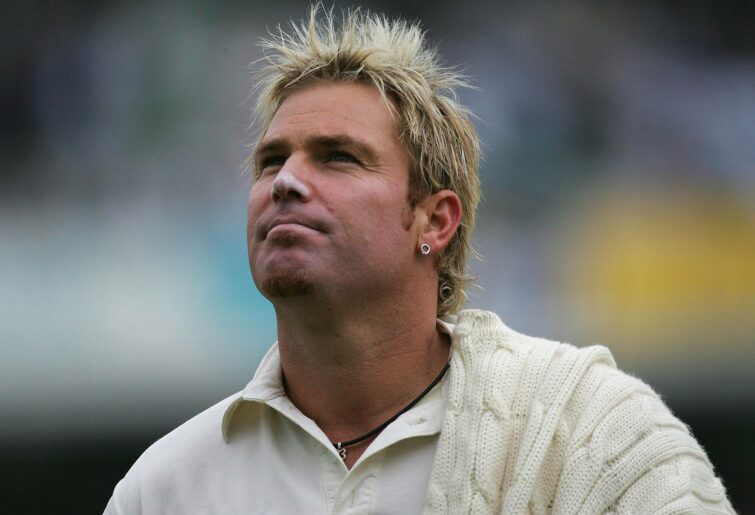
(Photograph past Hamish Blair/Getty Images)
And then where did it all go wrong? If Shane Warne was such a figurehead and someone who so many were aspiring to be like, how come we have used and then many spinners for such niggling success? What's more than apropos is that of that list of 15 spinners, fewer than half are wrist spinners.
Outset of all, the spotlight needs to be shone on junior cricket and the evolution of spinners. Junior coaches, parents and teachers would all agree that there are plenty of players who would like to emulate their spin heroes. Not simply has there been a lot of young Warnies willing to practice their flippers, toppies and googlies, but more than recently in that location are young cricketers trying to follow in the footsteps of Graeme Swann, Muttiah Muralitharan, Ravichandran Ashwin, Daniel Vettori and Nathan Lyon.
No-i will ever dubiousness that junior coaches have the all-time interest of their players at heart, but unfortunately many don't take the experience or knowledge to help nurture and develop them into outset-class cricketers.
Unfortunately, cricket is a sport that has recently seen a subtract in participation across all ages. In detail the older inferior groups have seen a significant change in numbers. Therefore the resource clubs accept at their disposal are very express. They don't take the funds to be able to send every bus off to develop their skills through state-run qualifications, so suddenly someone's parent, who has volunteered their time, is in charge.
However, they may lack knowledge of the art of spin. The grip, the run-up, the gather, the follow-through are all critical components in having the power to bowl consistent and potential wicket-taking deliveries. So unless this coach has played the game or has spent time upskilling themselves through well-structured coaching programs, the junior spinner is left to develop this difficult art through imitation alone.
Coupled with this lack of spin bowling cognition, Australian juniors are playing on difficult synthetic pitches. This results in a constant bounciness that nigh batsmen tin predict and play cantankerous-batted shots for equally they tin can trust the bounce. Each junior spinner will be told to toss the brawl up and entice the batsman down the wicket; however, the batsman, patently the intelligent brood of cricketer, has solved the puzzle and plays the spinners from the crease.
Despite following their coach's best intentions, spinners either struggle to take a wicket because the ball has spun by the bat or become for plenty. Imagine the patience needed to keep pursuing this skill because their teammate at the other terminate would be going for fewer runs and could accept more than wickets just by bowling seam up.

(Photo by Hamish Blair/Getty Images)
The solution? Coaches need to continue to advance their knowledge and ability to articulate the technical and mental components to spin. They play such an important role in the evolution of young spinners – information technology cannot be underestimated. Coaching courses, seminars, webcasts, podcasts, books and websites all need to be attended, participated in and read in order to learn different means in which to coach and nurture these spinners.
Furthermore, each passenger vehicle needs to tweak their coaching philosophy to incorporate patience. Allow a spinner to develop past providing encouragement, positive feedback and defensive fields. By setting attacking fields with simply one in the deep, in particular during the first couple of overs, you are non allowing whatever room for bad deliveries. Juniors will brand mistakes, drop i short or throw in a full toss – that'south the nature of their development. Having defensive fields allows room for mistakes and volition keep their confidence loftier with a low economic system rate.
Can nosotros accept greater exposure to turf grounds and pitches? We accept the structures and competitions in place, but are they supported by local councils who coordinate the grounds? Turf pitches are common in England for kids from equally young equally ten. They are exposed to the conditions that their heroes are playing, and information technology enables their techniques and skills to develop in the environment that they volition play in at the summit. This as well means that deliveries from spinners are more likely to hit the stumps, to go a leg earlier. Footing staff in England produce corking turf pitches for juniors and even so accept the ability to prepare decent wickets for senior cricket.
How come this practice isn't in place in Commonwealth of australia? Perhaps information technology's the funding or the conditions, or mayhap it's just the demanding councils that don't classify plenty fourth dimension to curators.
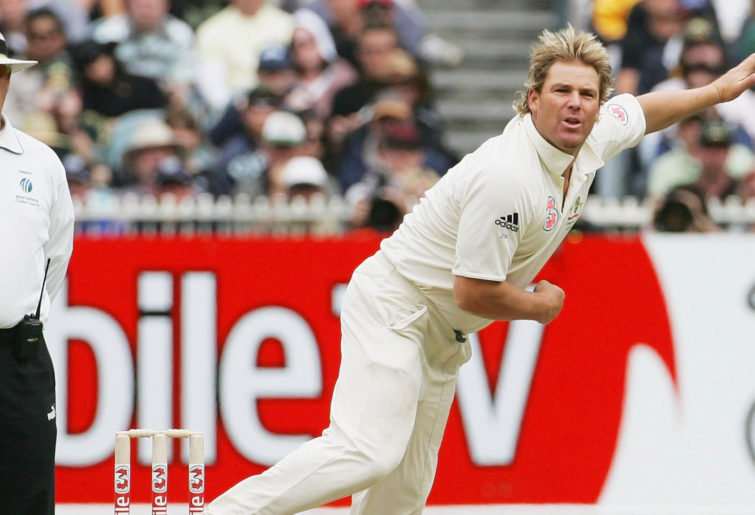
(Photograph by Hamish Blair/Getty Images)
Maybe the answer is in the evolution of a cricket ball that doesn't bounce as much. Still accept the dimensions, the seam and hardness of a regulation Kookaburra only without the density to prevent that shoulder bouncing brawl.
Perchance nosotros have been looking at it from the wrong angle. Maybe the respond is in how good Shane Warne actually was. Dislocated? Nigh volition acknowledge that his control and consistency were very rare. Stuart MacGill, who spun the ball greater than Warne, struggled to lucifer his constant line and length..
Possibly the answer is in the trajectory and speed at which a leggie should deliver it. Wait at Anil Kumble. The quick, bouncy and apartment leg spinner took 619 test wickets and might concur the answer for our next leg spinner. For about juniors, bowling quick leg breaks might be hard to begin with, but due to the speed and angle of commitment they are less likely to be hit across the line and belter from deep mid-on to deep mid-wicket. All information technology would accept is to convince the wearisome medium step kid to endeavor his manus at turning his wrist over – it volition bring him a lot more wickets and a lot more than success that might lead to farther honours.
Finally, a telephone call out to the Australian selectors. Nathan Lyon solved this dilemma and has carved out an amazing career of over 100 Tests. Picked from obscurity from the roller, his consistency and guile have meant he has become our most successful finger spinner. Only he won't last on the scene forever, and who is coming behind him? Is Mitch Swepson our next frontline spinner who will spin us to win on a Solar day 5 pitch? Is Tanveer Sangha someone who is showing the signs of beingness the next Australian matchwinner?
What the selectors need to do is to pick a spinner they call back will win matches for Australia and requite them a chance. The aforementioned list of fifteen spinners highlights the brutality and temperamental approach they have taken to the pick of our national squad.
Spin bowling. Ask whatever double-decker and it's one of the most difficult aspects of cricket to jitney. From the technical, mental and tactical side it's a daunting prospect that, unless approached with passion and enthusiasm, could issue in some other decade without a matchwinning spinner once Nathan Lyon leaves the game.
Shane Keith Warne is a great of this game and has left then many incredible cricket memories behind. The art of spin bowling and in particular wrist spin is his legacy, and then now it'south time for us to re-energise this craft and to breathe life into what Warnie did best.
Source: https://www.theroar.com.au/2022/03/31/how-do-we-honour-warnie-revive-the-art-of-spin/?comment_id=8429070
0 Response to "Art Hub for Kids Art Hub for Kids Moana"
Post a Comment